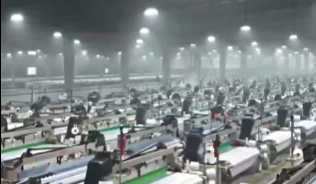
In the arid landscape of Aral, Xinjiang, a new kind of industrial revolution is humming along without a single human on the factory floor. A massive Chinese textile factory is now operating 5,000 looms around the clock, a 24/7 lights-out operation orchestrated entirely by AI and automation. This isn’t a futuristic concept; it’s the stark reality of modern manufacturing, where the competitive edge is no longer cheap labor but relentless, robotic efficiency.
The facility is a stunning, if slightly unnerving, showcase of a true “dark factory”—a manufacturing plant designed to run with minimal to no human intervention. This move is a core component of China’s broader “Made in China 2025” strategy, which aims to pivot the nation from the world’s workshop for low-cost goods to a high-tech industrial powerhouse. As this facility proves, the textile industry—often considered traditional and labor-intensive—is squarely in the crosshairs of this technological upheaval.
This plant is a prime example of the concepts explored in our deep dive on Translation not available (en-us) , where the focus shifts from managing people to orchestrating intelligent, autonomous systems. While companies like Foxconn and Xiaomi have made headlines for automating electronics assembly, the scale of this textile operation suggests the dark factory model is rapidly expanding across all sectors.
Why is this important?
The Xinjiang factory is more than just a technological marvel; it’s a direct challenge to the global manufacturing status quo. For decades, Western companies offshored production to capitalize on China’s low labor costs. Now, China is building a new competitive advantage that is far harder to replicate: massive-scale, hyper-efficient automation. This forces competitors to confront a difficult choice: invest billions to keep pace with this robotic arms race or risk becoming industrially irrelevant. The era of competing on labor costs is officially over; the era of competing on algorithmic efficiency has just begun.